The invasion of futsal cages across the so-called Tanglin Oval is quite a horrifying sight. Surely, the old Tanglin Barracks cricket ground deserves better, having had a place in history as Singapore’s very first dedicated military sporting ground. Set up by the soldiers of the barracks in 1870, the ground represents the commitment of their commander, Major Charles Hamilton Malan, to maintaining the mental, spiritual and physical wellbeing of the troops that he led. Malan commanded the right wing of the then Hong Kong based 75th Regiment of Foot — one of the components of the future Gordon Highlanders.
The 75th Regiment, was the second unit to be quartered at Tanglin Barracks, built to house European infantry soldiers in the early 1860s, but left unoccupied until early 1869. The living quarters back then were a mix of attap thatched timber accommodation blocks laid across the low elevations at Tanglin that up to a decade prior were planted with nutmeg trees. Thick vegetation had taken over in areas that were cleared but not built on. Malan set the troops under his command to work, clearing the “jungle” around the barracks to improve their habitability. The effort provided troops who might have otherwise idled unhappily away in the discomfort of the sweltering tropical heat some purpose.
Carving out a cricket ground — the Oval, as it would come to be known, was next on Malan’s agenda, which as Malan recorded in his memoirs, was no easy task. It not only required the clearing of jungle, but also the levelling of land — all of which was accomplished in a matter of months:
Looking down upon what was then thick jungle I said to my sergeant major: “Sergeant-major, what a capital place this would make for a cricket-ground! I’m an old cricketer; I used to be very fond of cricket. I’ll tell you what it is, we’ll make a cricket-ground. It would be good amusement.”
I looked at my friend’s face. There was a very placid smile upon it; and while he stood strictly at attention, he looked at me, as much as to say, “If you had the whole army here, you would not do it”.
Within six months of that time the jungle was gone, and there, in its place, was a cricket-ground, having a turfed level ninety yards long, forty wide and this level having been made in the slope of a hill!
How often, after it was finished, as I rode or walked up to the hospital to talk to some sick comrade, have I seen the slopes of the barracks covered with men, watching their comrades at play; and how I have lifted up my heart in thanks and praise to God, who gave me the wisdom, energy, and faith in Him to attempt and carry out such an undertaking! The making of this cricket-ground was a work of very great labour. The cutting of the jungle and rooting up the trees was the least part of it.
The former hospital.Malan’s road to the hospital.
Sport has long been a component of military life. Besides the benefits to the physical and emotional wellbeing of the soldiers, sport builds camaraderie and builds bridges between soldiers and their officers.
The cricket field (roots.sg).
Cricket fields and sporting grounds have been an essential feature of British army barracks since the 1840s when General Sir Rowland Hill, Commander in Chief of the British Army, gave orders for a cricket ground be provided in the country’s military barracks and this field in Tanglin Barracks represents the first attempt to export this to Singapore. Up to the point that it got “caged”, the field remained much as it was for over a 150 years. The addition of the futsal cages, laid on a raised bed of concrete, has quite sadly put an end to the field and the legacy (even if one can argue that the futsal cages continues its use as a sporting ground) that Malan left behind. It has also destroyed the wonderful view of the slope that Malan mentions, as well as adding the unsightly clutter of cages.
The former Tanglin Oval, before it was desecrated. The “slopes of the barracks covered with men, watching their comrades at play” that Malan described seeing as he made his way to the hospital (now Loewen by Dempsey Hill) can quite clearly be visualised.
The Tanglin Oval, late 1960s. John C Young Collection, courtesy of National Archives of Singapore
The ugly mess that Malan’s field has become.Work started at the end of last year.De-fielding Malan’s cricket field :(.
Believe it or not, the exodus of Singapore residents to Johor Bahru during the weekends goes back a least 150 years to the 1870s. The draw of JB back in those early days were neither its food or shopping, but the Johor’s many gambling establishments. Gambling had been made illegal in Singapore in 1829, and many turned to illegal establishments to satisfy that gambling itch, or make the trip to places like Johore or Batam where gambling farming* was permitted.
The draw in Johor Bahru, its so-called “Monte Carlo”.
Getting to Johor’s “Monte Carlo”, as it was often referred to, required quite a fair bit more effort than it does to cross over to JB these days, even after taking the traffic jams that one now encounters into account. Those were times before the causeway and motorised transportation made their appearances. The cost of hire of a horse and carriage to Kranji, from where one could hire a sampan to get across, would have made the trip quite costly and out of reach to the masses.
A four-horse omnibus (stagecoach), Raffles Place, late 1860s.
It would take the appearance of the first large movers that would make the trip to Johor a more attractive proposition. These took the form of horse-drawn omnibuses, which were in essence a larger form of the horse carriage, that began to gain popularity in the 1870s as the decade progressed. Omnibuses in Singapore are first mentioned in the 1860s when they were used for the delivery of mail. By the mid 1870s, horse omnibuses began to be seen as a “cheap conveyance that supplied the great want of the native population”. Services were soon running between Central Police Station and Rochore, stopping at any part of the route along South and North Bridge Roads and were observed to have been “generally quite full”.
A London Horse Omnibus
Descriptions of these omnibuses vary. Typically they were drawn by two or more horses, and could carry a greater number of passengers (and baggage) than hackney carriage common in the day (an account describes one that carried sixteen passengers). A description also exists of what appears to be a much scaled down version of the omnibuses that were already popular in Europe and the United States, with the vehicle in question having been a “skeleton of a young omnibus” which had no sides, fitted with seats with short backs, and a light roof supported by wooden rods. Whatever they were, a photograph of an omnibus in Singapore taken possibly in the late 1860s at Raffles Place, does exist and shows one that was closer in appearance to what would have been seen on the streets of London or Paris back in the day.
Omnibuses certainly supplied the great want of those heading to Johore, as well as carrying the mail there. At least eight such omnibuses to Kranji ran daily, departing between 7 and 8 in the morning and between 1 and 2 in the afternoon. The operators of these services included established livery stable owners such as Lambert Brothers at Orchard Road, F Clarke and Company at North Bridge Road / Coleman Street, along with some enterprising Chinese business owners. Demand for services was high during the weekends, when “an exodus of young men headed across the strait to speculate (gamble).” Pay-days were when these buses were “most crowded”, as many young men (and some women) made the trip to the “sorrow of their wives and families”.
The journey to Kranji took three hours and the crossings to JB were made by sampan and later steam ferry. The omnibuses ran on iron tyres and the overworked horses were changed two or three times during the journey. Pulling the large carriages over a distance took a toll on the horses. Omnibus proprietors worked the horses even when they were in poor health, and several were fined as a result.
The introduction of other forms of transportation, particularly the very affordable jinrikisha in the 1880s would see to the horse-drawn omnibus falling out of favour in the urban routes. The services to Johor however continued, even if there were reports of jinrikisha pullers making the long and arduous journey to Kranji. The opening of the railway in 1903, offering much shorter journey times, saw to the Singapore to Kranji omnibus services falling out of favour. As for the practice of gambling farming, it was abolished in Johor at the end of 1917.
As well as having the power to evoke a deep sense of longing in us for places we can no longer see, old photographs can be windows into the past, and provide us with clues to life beyond what the rose-tinted lenses we often have on, have us see.
This 1941 photograph, is a perfect example. Captured in colour — a rarity for photographs from those days, it was one of a large number taken by Harrison Forman. Forman was one of two American photographers, the other being Carl Mydans, who documented a Singapore making preparations for a war that no one thought would come to its shores.
McCallum Street, 1941, Harrison Forman Collection
The photograph shows an incarnation of McCallum Street that we may have forgotten about, as a street that looked quite typical of much of built-up Singapore, lined with a most common of urban constructs, shophouses, with poles of laundry hung out to dry. The shophouse façades are also quite typical, and have inscriptions in Chinese characters that told of the aspirations of the houses’ earlier occupants. A rickshaw dates the photograph to before they were taken off the streets in 1947. Interestingly the shophouses are raised, which could indicate that the possibility of the street being flooded was considered in their construction.
Another interesting aspect of the photograph, is the absence of any form of street lighting except for a single gas lamp post. Gas lamps provided much of the public illumination back in the day, and the single lamp would certainly not have brightened the street to the levels that we have come to expect today. The municipality’s first gas lamps were lit came on 24 May 1864, the birthday of Queen Victoria, and replaced the much less effective oil lamps that were first introduced on 1 April 1824. For the purpose, the Singapore Gas Company was established in the 1860s to produce methane from coal. The gas company was transferred to the municipality in November 1901.
By the time that this photograph was taken, electricity also powered a selection of street lamps. Electrical lighting on a large scale was first seen in 1897 on the premises of the Tanjong Pagar Dock Company. Electricity however, was only made available to the municipality in 1905 through an arrangement with the Singapore Tramways Company to supply of excess power from its plant in MacKenzie Road. Electric street lighting was introduced in 1906 to light up Raffles Place, Boat Quay and a section of North Bridge Road. It would however only be in the mid-1950s that a complete switch was made to electric street lighting.
There would also have been other items connected with gas lighting and gas supply that would have been visible. Some appear in other photographs from the era. The huge gas holder at Kampong Bugis, part of the Municipality’s Kallang Gasworks, was on item that was quite a landmark. It was after the gasworks that the name of the area in the Hokkien vernacular, “Huay Sia” (火城) or “Fire City”, came about.
Another large gas holder from the pre-war era that was also a visible landmark was located off Maxwell Road. Installed in 1913 and reconstructed after the war, the Municipal (later City Council) Gas Holder stood on a site just across what became Kadayanallur Street from Maxwell Road Market (now Maxwell Food Centre) — right where URA Centre stands today.
The Gas Holder at Maxwell Road.
The use of gas lamps also required an team of lamplighters to be employed. The task of the lamplighter was to light the lamps up at 6 pm and blow them off at midnight. The installation of time switches in the 1940s reduced the need for these lamplighters, although many remained in employment to clean and maintain the lamps and as back ups should the automatic timers failed. The task was by no means easy or safe, lamplighters could be seen carrying their ladders on bicycles and propping them against the arms that projected horizontally from the gas lamp posts. There were a number of fatal accidents involving falls or due to lamplighters being struck by vehicles in the course of performing their duties.
The view from a reimagined sea … to an earthly abode of the goddess of the sea.
It may be difficult to imagine it now, but there was a time when the sea washed right up to Telok Ayer Street.
Those were times when the street was a landing point. Many who came ashore here would have left home and family to embark on a journey that was filled as much with hope and promise, as it would have been with apprehension and uncertainty.
Coming ashore having survived a passage across tempestuous seas, the newly arrived had much to be grateful for. Shrines placed so homage could be paid to the heavenly beings whose powers of protection had been called upon were a necessary first stop. As the communities grew, in both numbers and wealth, these shrines of gratitude were made more elaborate, and serving as focal points for the communities that erected them.
One such shrine turned elaborate place of worship was the Thian Hock Keng, a focal point for the Hokkien community and the subject of the photograph. Dedicated to the protector of seafarers, Mazu, the temple is a joy to photograph in its various moods.
More on the temple, its activities, and Telok Ayer Street can be found in these posts:
Good Friday at the Church of St Joseph at Victoria Street is a special occasion. The church’s commemoration of the solemn occasion is when the church’s Portuguese influences are best seen, especially in its elaborate re-enactment of the events that followed the crucifixion of Christ that is accompanied by the visual spectacle of a candlelight procession.
The church is thought of as the spiritual home of the small but prominent community of Portuguese Eurasians, many of whom have their roots in Portuguese Malacca, is thus commonly referred to as the “Portuguese Church”. It was established in 1853 by the Portuguese Mission, whose work in Singapore dates back to 1825 (the current church building dates to 1912). The former parish of the Portuguese Diocese of Macau (and before that the Diocese of Goa) was transferred to the jurisdiction of the Archdiocese of Singapore in 1981, with the Macau Diocese maintaining links with the church until 1999, when the last Macau-appointed rector also left.
Here are some photographs from the church’s commemoration of Good Friday on 29 March 2024:
Candles are lit as part of the procession, transforming the grounds of the church into a sea of candlelight. While not as well attended as before — when the church grounds would be filled to the brim with many more spilling out onto Queen Street, the procession is still a visual spectacle.
The re-enactment involves a life size figure of the body of Christ, which is lowered from a cross. Similar re-enactments take place in churches in Goa, Macau and Malacca, as well as in churches elsewhere.
The letters INRI by the way represents the inscription “Iesus Nazarenus, Rex Iudaeorum”, which in Latin, translates into “Jesus the Nazarene, King of the Jews” representing what was an inscription made in three languages (as per John 19:20) — Hebrew, Latin, and Greek.
The procession.
The procession re-enacts the journey that Christ’s lifeless body took after being lowered from the cross to the site of his burial — a Portuguese influenced tradition of the church.
The image of Our Lady of Sorrows, a representation of Mary, following the bier carrying the figure of Christ.
A member of the church’s congregation playing St. Veronica who is believed to have wiped the blood and sweat of Christ on his crucifixion on Calvary.
Not only has the crowd shrunk, the candles have too! I recalled candles being carried that were as much as six feet long and which had to be supported by pieces of wood.
I just uncovered this gem, from an interview that I conducted in 2014 with three sisters, Neng Atini Roslan, Danilah Roslan and Siti Dahlia Roslan.
The Girls of Jalan Saksama, as I called the sisters, had some wonderful stories to share of their experiences in Kangkar Fishing Village and in Jalan Saksama in Changi — two places that we can now only imagine.
With the Girls of Jalan Saksama, an elder sister, and a cousin.
Memories of Kangkar
Our father was a health inspector with the health department. Before Dahlia was born, we lived in a bungalow that belonged to the government, in Kangkar, near Punggol.
Kangkar was a fishing village. There was a fish auction market there, next to our house, and beyond that, a jetty. A police station stood at the end of the road.
There was also a mama (a commonly used Tamil word in reference to an elder or an uncle) prata shop right next to our house. The people who worked there came from India and wore a short sarong that was often pulled up.
The men had left their families back in India. They missed their children and every time they saw us, they would try to hug and kiss us. We never liked it and avoided going into the shop, even when we had to ask to borrow their matches.
The catch was brought in to the fish market very early every morning. Lots of boats came in. Although it was hard to tell from their sun-darkened skins, the fishermen were mainly Chinese. They came from Indonesia and spoke what sounded like Hokkien, or possibly Teochew.
We could see the auction from the balcony of our house, hearing shouts of “sa-chap, sa-chap; see-chap, see-chap; gor-chap, gor-chap” – “thirty (dollars), thirty; forty, forty; fifty, fifty” as the auction progressed. We once saw a huge turtle being sold. It had been turned upside down.
A towkay from the fish market, Mr Png, was very nice to us. He often allowed us to pick the best live fish for free. We could also take dead fish to feed the cat.
We were the only Malays in the village. During a visit there by the then Prime Minister Mr. Lee Kuan Yew, as the only Malay man there, my father was invited to sit next to him.
It was the Chinese neighbours, Mr Png in particular, who helped to protect us during the racial riots. There was a curfew during one outbreak. Our father couldn’t come home and called Mr Png, who came over with the news. He advised us to stay indoors, keep our doors locked and to expect a lot of noise. He also said we would be safe upstairs and gave us some fish to eat.
The riots spread to the village and it was frightening. We could hear the commotion outside, but our mother kept us well hidden on the upper floor of our house. The long stairway of 30 steps that led up could be raised and closed. We kept our heads down so no one would see us.
Mr Png had a son named Tai Seng, whom he had offered to my parents for adoption since there were only girls in our family. At the time, our mother was expecting Danilah and so declined the offer. She thought it would be too taxing to take care of two infants.
With Mr Png and the other Chinese villagers, we communicated in Malay. Everyone spoke some form of Malay then.
The Chinese wayang came to the village during the Chinese festivals. We remember a festival during which we could see the loh-tang, mediums in a trance. They seemed to go crazy and would sometimes chase the children. During that festival, ash would be thrown into the river.
Changi: “The Best Years of Our Lives”
In 1967, we moved from Kangkar to Jalan Saksama near Changi, where our parents bought two acres of land close to Kampong Darat Nanas, behind Changi Prison. The beach was close by, about half an hour’s walk away.
The house that we lived in had already been built when we acquired the land. My father refurbished it and whenever he had money, more rooms would be added. We got our drinking water from a standpipe. Water for other uses such as washing, came from a well.
Unusual as it may have been for Muslims, we had four dogs. They were needed for security. We also kept chickens, geese, turkeys, guinea pigs and even mongoose.
My father planted many trees: forty coconut palms, twenty rambutan, twenty mango and four durian trees. The durian trees only started bearing fruit as we were about to vacate the place. The rambutans were of both the red and yellow varieties. There were also jackfruit, papaya, soursop, custard apple and jambu trees.
We loved climbing the trees. Often, so as to be undisturbed by our dogs and chickens, we would climb a tree to eat nasi lemak, which would be wrapped in a banana leaf. We each also had a favourite tree, from which we would sometimes hang upside down.
There was a Chinese vegetable farm near our house. The farmer also kept pigs. This was perhaps for their manure, which was used as fertilizer. For just five cents the farmer allowed us to pick almost anything we needed from the vegetable plots and often we would take home two to three kilogrammes of vegetables.
From the farm, we also got our supply of fresh eggs, to supplement the eggs our own chickens had laid.
On the left side of our house, there was a sugarcane plantation and also a chiku and rambutan plantation. We would sometimes help ourselves to the fruit, filling baskets we carried with us. Whenever a car passed, we would hide or pretend to be picking grass for the chicken coop.
Our father was the sole breadwinner and whatever he earned went into supporting the family. We had little in terms of luxury and had ice cream only once a month. We bought this at the provision shop that we visited once a week for our grocery shopping.
We purchased groceries on credit. The credit the shopkeeper extended to us was recorded in a little booklet in which we were identified as orang kaya or rich people. It always seemed ironic to us as we owed the shopkeeper money for every item that we purchased. The shopkeeper somehow trusted us. He never failed to deliver the goods on the list our mother prepared, no matter how much we owed him.
The shop was located halfway along the road to the prison, which was in Upper Changi Road. We always had the dog Blackie with us. It was probably because of the dog that the other Malay folk in the village were wary of us. As a result we did not mix with the other Malay children in the village.
There were several other shops at Kampong Darat Nanas. Besides the Malay shop that we got our groceries from, there was also an Indian shop and a Chinese provision shop that was closer to the prison.
For 5 cents we got our supply of ice-balls from the Chinese shop. The ah-pek (a Hokkien word that refers to an elderly man) at the shop never seemed to wash his hands when he made the ice-balls. We never washed ours either and devoured the flavoured ice as fast as we could.
There was a big tree in front of the prison. The top part of the tree seemed to be dead, but the bottom was somehow alive. We called it the “haunted tree”. Everyone from the village seemed to keep well away from it with the exception of the Chinese folk because a Taoist shrine was maintained under the tree.
We were not supposed to go to the beach on our own, but we went whenever we could. This would usually be during the weekends or during the school break. What drew us to the beach was that we could play in the sea. With Blackie always by our side, we headed there on the dirt road that led to the coast.
There was a spring along the way, very close to the sea (this would have been at Ayer Gemuroh). Water gushed out from it and came out of a slope by the side of a road. It was where we could stop to quench our thirst. We never had to carry water with us.
We gained access to the beach from the side of a mosque located by the sea. There seemed to be no access from other areas along the beach because many houses and bungalows had been built there.
Our home in Changi provided us with the best years of our lives. Sadly, we had to leave it behind after living there for about 10 years because the government wanted to acquire the land to build Changi Airport. We were given six months to vacate our home.
The Pain of Moving
We decided to move out early although many of our neighbours stayed on for as long as they could. We did not want to live there without water and electricity, which had already been cut-off.
Since the flat we had applied for in Haig Road wasn’t ready yet, we were provided with temporary housing for three months, so we moved into a very cramped two-bedroom flat in Changi Village. It was rather stressful for us. There was nowhere to run around and we cried all the time.
Our father also had to give the dogs away, to a friend of his who lived on a property with land in Punggol. The dog that we were close to, Blackie, often attempted to look for us.
Once, when we were going visiting in a car, we saw a dog puffing and panting, running along the road. It was Blackie. He had run away from his new master and had somehow found us.
Blackie also looked for Danilah at Bedok Primary School where she went to school. On one occasion she had seen a dog from the bus she had boarded on her way home from school. Danilah recognised Blackie and as soon as she reached her home in Changi Village, she threw her books and her violin down, then took a bus back. Blackie was still waiting for her and when she called and approached, he immediately jumped up on Danilah, who started crying.
At Changi Village, we walked to the beach every morning. We also went fishing. There were plenty of fish to be caught, including ikan tamban (sardine) and ikan selar (yellowtail scad), which we caught without using bait. We would spend hours fishing.
Life was very different when we moved to Haig Road. A lot of adjustment was needed and it took us a long time to adapt.
These days we are spread far and wide, Danilah has moved to the U.S. and Dahlia now resides in Bahrain. We try to come back every Hari Raya and that is when we can reminisce about our days by the sea. We deeply miss the sea and everything about the place we had by the sea. We miss the trees, the dogs, climbing trees, running around, and most of all, the freedom that living there had allowed us.
A page from the Street Directory showing Jalan Saksama in relation to Tanah Merah Besar Road and Changi Prison. A large part of the area is now where Changi Airport is.
Changi is many things to me. It is a place, unspoiled in some parts, of great natural beauty, a place of much history, and most of all, a place whose magic is timeless. Changi has given me many moments of joy. I frequented Changi as a young child, and in my youth. There were many Sundays by the beach, strolls through the old village and then concretised version of it. I have also had many stay in the area’s government holiday bungalows and even had a party for my National Service Run-Out-Date (now referred to as Operationally-Ready-Date) at one that quite sadly, was demolished not too long ago. Even if a huge chunk of the Changi that was dear to me as a child was taken away by the development of Changi Airport, the space Changi has on offer, its calming views of the sea, and places in abundance which modernity seemed to have forgotten, it continues to be my favourite place of escape to this very day.
Changi Point, where time seems to slow down, and where time seemed to have passed very slowly, is where focus has been placed in the the Changi Heritage Trail, the latest in the National Heritage Board’s (NHB) series heritage trails. This and the 23 heritage trails before it, are a wonderful gift that NHB has given to us in Singapore. Through them we gain a much deeper appreciation of everyday places in Singapore and gain a better understanding of what made them what they’ve become. We also learn about the interesting tales that may be embedded in these places, their communities, and how their connections with the place may have developed over time.
Changi’s past, or at least its documented past, goes back to the early 1600s, when it was marked in maps as Tanjong Rusa. A Portuguese map, produced by Malacca-based Manual Godinho de Erédia and published in 1604 to aid in the discovery of the legendary islands of gold, depicts this, as does a 1607 Dutch map made by the de Bry family that records a ferocious sea battle fought in 1603 off the coast of Tanjong Rusa between the sea powers of the period, the Dutch and Portuguese. Both this maps, show how Changi was recognised as a strategic location, well before it became an essential component of the coastal defence systems built in the 1930s to protect the Naval Base in Sembawang.
This, as well as a wealth of other intriguing aspects of Changi’s past, captured in the 23 wonderful sites that the trail features, is contained within the trail’s well-researched companion guide booklet. There is also a trail map, in which one finds suggested routes of discovery organised around three themes: Bungalows and Beaches in Changi, War and Peace in Changi, and Gateways and Communities in Changi, all of which are give a great sense of what is really a unique part of Singapore, what it was, how it developed, and most importantly for me, a painful wartime past that should never be forgotten. The latter is why it is important to share stories of Changi. One way this is also done is through the annual Battle for Singapore commemoration. It is also why I think what’s left of the old Changi should be kept the way it is.
Soft copies of the companion guide and map can be downloaded from https://go.gov.sg/roots-changi-heritage-trail. The map will be made available in all four languages from June 2024. Limited printed copies of the companion guide are also be available at Siglap Community Club, Changi Chapel and Museum, and Asian Civilisations Museum.
Bungalows and Beaches in Changi (1 hour with public transport) 4km
The route explores Changi’s past and present as a leisure destination.
Changi has long been home to Government Bungalows. Bungalows, recreational facilities such as sailing and beach clubs, and holiday chalets are found in present day Changi , many of which have links to the past as a leisure destination and as a military base. Taking a walk along this route will bring you close to some of these places, all of which have a tale or two to tell.
Route Highlights:
Bungalows and Leisure in Changi The Manasseh Bungalow – the oldest house in Changi (See also: History Misunderstood)
E S Manasseh’s Holdiay Bungalow, which was a popular spot for honeymooners.
Inside the E S Manasseh’s former holiday home today. The bungalow was taken over by the War Office for a school. It was used later as a transit hotel in the days of RAF Changi and had a brief spell as part of the Cheshire Home in part ofthe 1970s and 1980s.
Changi Cottage, which LKY took a rest in following the stressful days of separation from Malaysia in August 1965, is bes viewed from the boat to Ubin.
Built as a holiday residence for the Governor and other senior officials in 1950, Changi Cottage was a go to place of escape for the Prime Minister and other members of Government in the early years of independence. It can now be rented by members of public for stays.
Changi Sailing Club
The Changi Sailing Club Jetty. The club has its roots in a yacht club established in the 1930s. Sporting pursuits were an essential feature in the military.
Changi Beach Club
Changi Beach Club, which has its roots in the Officers’ Club from the days of RAF Changi. The club features a uniquely designed clubhouse built in 1950 that projected over the beach. It was designed by Palmer and Turner. As the beach club, I visited it as a child and I recall swimming in the salt water pool that it then possessed.
Fairy Point Chalet 7, a former married officer’s residence built at the end of the 1920s.
Did you know? That Fairy Point was named after a wooden bungalow owned by Mr Gottlieb, a magistrate. The bungalow was demolished for a senior officers’ residence known as Fairy Point House or Fairy Point Chalet 7 in 1929. The cluster of buildings on Fairy Point Hill and Batu Puteh Hill next to it was where the first structures built by the War Office came up and is thus the oldest section of the cantonment.
The bungalow, was one of several bungalows put up as retreats in an area of extreme natural beauty. The charm of Changi was already well known in the 1840s, when the government built Changi Bungalow held the reputation of being a “fashionable place for picnic parties”. Built of timber, Changi Bungalow was the predecessor of a series of bungalows that the government has maintained in and aorund the site of Changi Cottage until this very day.
War and Peace in Changi (1.5 hours with public transport) 7.6km
Changi was developed as a military cantonment from the end of the 1920s, in and around which a system of coastal defence was also placed to defend the maritime entrance to the naval base.
Changi Point in particular, contains a wonderful set of military structures that were designed to maximise the comfort of soldiers in the tropics. The structures were templates for barracks across the rest of Changi built in the 1930s, as well as Gillman Barracks and Nee Soon Barracks. Changi was also where a prison came up in 1936, which was placed at the southern end of an area that was used to hold internees, both civilian and Prisoners of War (POWs) during the Second World War. The period would leave an indelible mark on Changi, which will always be associated with the depravation, pain and suffering of captivity. There are also many stories of resilience, of the triumph of the human spirit in the face of great adversity. It is in Changi Chapel and Museum that many of these stories are now told.
The War and Peace route is a great way to discover these stories and also understand Changi’s military past a lot better.
The cantonment at Kitchener Barracks (which housed the Royal Engineers until early 1942) contained the first barrack structures of this kind. Construction of which began at the end of the 1920s up to about 1935. These blocks, mostly along Hendon Road, were later repurposed to housed units associated with HQ Far East Air Force (FEAF) as part of RAF Changi from 1946 to 1971.
A tour for Battle for Singapore, 2024, during which I explained how an air strip was put in by the Japanese forces (with POW labour) and how and why that came to be used for landing heavy transport planes after the war ended. This would form the basis for the establishment of an air station, RAF Changi in the former army cantonment.
Amongst those held as POWs, there are some who spoke of being tasked with the gruesome task of clearing the remains of the victims of Sook Ching at Changi Beach (the beach beyond the footbridge at Changi Village, where a Sook Ching marker can be found)
Old Changi Hospital (seen here during a Discovering Singapore’s Best Kept Secrets visit that I organised in collaboration with SLA) has its roots in the RAF Hospital established in 1947 as part of RAF Changi. The three-floor Block 24 seen here, was originally a barrack block of Kitchener Barracks. The taller six-storey building, Block 161, was an addition to the hospital in 1962.
Did you know? That Changi Hospital was where more than a thousand RAF babies were welcomed to the world?
Many who were born there come back to have a glimpse of their place of birth, as do many who were warded at the hospital. The hospital was best remembered for the views and the environment that it provided for rest and recuperation and had the reputation of being the best in the RAF.
Gateways and Communities in Changi (2 hours with public transport) 12km
It is often the communities and the people that make a place. This is also the case in Changi, which was home to a varied lot. Beyond the military personnel, Changi supported a multi-racial community. Some worked for the military in areas such as catering and housekeeping. There were also those who ran businesses catering to the day-to-day needs of the soldiers and airmen, including tailors, sundry shopkeepers, photo stores operators, and food and beverage establishments. Changi Village, grew out of this and the modern version of it provides a reflection of this past.
Route Highlights:
Changi Point Ferry Terminal
Jetties and landing points have long been a feature of Changi Village. The image is of one of the two jetties at Changi Village from which passengers could hire boats to Pulau Ubin, Pulau Tekong, Johor and elsewhere, c. 1930s-40s (The Hebblewhite Collection, courtesy of National Archives of Singapore)
Changi Point Ferry Terminal, 2015. The ferry terminal which is near the village is a successor to the landing points of the past and provides a link to Pulau Ubin and also Pengerang in Johor.
Changi Point Footbridge and Sungei Changi (Changi Creek)
A wooden footbridge once carried people over Sungei Changi (Changi Creek) from the village to the beach. This was replaced by a concrete bridge in the 1930s, which has become quite an icon in Changi Point.
Changi Beach
Changi Beach in the 1960s and 1970s was a popular destination for a picnic. Those were days when you could drive up right up to the beach, find a shady spot under a tree and have your picnic out of a cra boot. Popular fare was curry chicken with French loaves, or fried bee hoon or mee goreng, all home cooked. Very often, families consult tide tables published in the newspapers before heading to the beach when the tide was high, that was best for swimming. It was also quite common for to see extended families being carried on the back of borrowed lorries bound for the beach. Also a common sight were sampans, large rubber tyre inner tubes being put up for hire.
Pill Boxes were onces a feature at Changi Beach. One even had a beach side cafe operating from it.
Changi Village
One of six new NHB markers. This one at Changi Village provides insight to the village and its community. The present day village, developed by HDB in the 1970s, replaced the old. Today you will find businesses such as Charlie’s Corner, which has a link to the past.
Changi Milk Bar, 1947-48 (Image Courtesy of Royal Airforce Changi Association)
Charlie’s Corner’s owner Charlie Han’s father co-founded the Changi Milk Bar, a popular spot for RAF Servicemen in the old Changi Village.
Sree Ramar Temple
The original Sree Ramar Temple building in 1946 (Image Courtesy of Sree Ramar Temple). The temple started off as a shrine containing an image of Sree Ramar under a sacred fig tree and a temple building was erected in 1946. The temple, which was always very visible as it was positioned along the main road to Changi Village (now within the grounds of Changi Air Base West), has been a feature of the area ever since.
A member of the temple committee sharing about how he grew up in the village near where the mechanised car park is today. He looked forward to rainy days so that he could play in the water.
The temple today
Former Kampongs of Changi
While the physical reminders of the coastal kampongs of Changi may have disappeared, what remains are the memories of those who lived in them. Mdm Isiah Majid, a former resident of Kampong Ayer Gemuroh recalls the fresh water spring that the village was named after and was well known for. She also recounted popular village activities such as “berkarang” or coastal foraging and how kapur (slaked lime) was produced from burning cockle shells in Telok Mata Ikan. Kapur is used in producing whitewash, which was sold to villagers and shoe whitener.
There were also coastal villagers around Changi Point, along the area of the boardwalk (Changi Point Coastal Walk) near the sailing club, where Kampong Batu Puteh was. Two graves along the boardwalk are a reminder of the kampong, which on maps had a mosque and a cemetery.
Changi Airport
Changi Airport’s most recognisable feature is its control tower, seen here as viewed from Jewel Changi Airport. The airport’s runway occupies an area where Kampong Ayer Gemuroh once stood. Changi’s aviation history is linked very much to its wartime past and started with an airstrip put in during the Japanese occupation. The returning British found the airstrip (with strengthening) suitable for their large transport planes and out ot that rose RAF Changi and the Headquarters of the Far East Air Force. Proposals to build an international civilian airport also surfaced. An announcement was made in 1948 that an international airport that was to have been the “best in the world” would be built.
The father of Mr Joshua Woo was a contractor who worked on the Changi Airport Control Tower.
Did you know? That in 1946, plans were made for a civil airport in Changi that in a 1948 announcement, was to be the “world’s best airport”?
While the idea was abandoned soon after as there were concerns on the sandy subsoil, it would be a prediction that would be fulfilled some 4 decades later. Changi continued to be developed by the RAF. In 1952, the military airfield actually welcomed the first civil passenger jetliners calling at Singapore on regular services (Kallang Airport’s runway had been deemed inadequate). Paya Lebar would be built in 1955, and in 1981 Changi Airport, considered by many to be the world’s best or among the world’s best was opened.
The full moon of the Tamil month of Panguni sees the festival of Panguni Uthiram celebrated with a procession of kavadis in the Sembawang / Yishun area. The tradition of the procession in Sembawang, dates back to the days of the Naval Base and is organised by the Holy Tree Sri Balasubramaniar temple now in Yishun Industrial Park A.
From 22 Mar to 21 Apr 2024, the Flower Field in Gardens by the Bay’s Flower Dome, brings Kyoto to Singapore — with yet another dimension is added to what has become an annual Sakura floral display that is now in its ninth year. For the first time, the display features a day-to-night experience, as visitors can immerse in the Japanese traditions of hanami or cherry-blossom viewing, as well as a nighttime experience known as yozakura or night cherry blossoms. The display features the blooms of some 140 trees of over 40 varieties, including plum blossoms from Europe.
Kyoto’s famous Kinkakuji is being recreated, giving visitors a chance to also have the yozokura night cherry blossom viewing experience for the first time in Singapore.
This year’s theme revolves around the experience in Kyoto, and specifically the Golden Temple or Kinkakuji. The UNESCO World Heritage temple has been recreated for the display along with recreations of traditional Miyama Village style thatched houses, elements of Japanese gardens such as engawa, a veranda found in traditional homes, a sozu — a bamboo water fountain, the chozuya — a large basin with wooden dippers used to purify oneself at sacred spaces and the ema — small wooden plaques hung at shrines to offer one’s prayers.
Programmes and Promotions for Sakura, Blossom into the Night
TOURING SPRINGTIME JAPAN Flower Field Hall Admission to Flower Dome applies on opening day on Saturday, 23 March 2024. Admission is free on Sunday, 24 March 2024.
The rich tapestry of Japanese culture and cuisine is showcased at Touring Springtime Japan, where a line-up of activities relate to some of the best that Japan’s six key regions have to offer! Learn about each of the prefectures and the culture and food of these regions, as well as sample delicious snacks from Japan. Don’t miss the chance to experience the age-old tradition of mochi pounding, where a wooden mallet is used to vigorously pound flour into a sticky, delicious mochi cake.On Saturday, March 23, ticket holders to Flower Dome will be the first to experience these exciting cultural experiences. Programmes will then be open to all members of the public for free on Sunday, March 24.
Cultural experiences / programmes include: HIBIKIYA
Watch Japanese drum group Hibikiya play the recognisable beat of the taiko and other traditional Japanese instruments as well as perform traditional dances.
23 March 2024, 1.30 pm to 2 pm and 3.30 pm to 4 pm
YOSAKOI
Yosakoi is a unique Japanese style of dance and vibrant melange of tradition and modernity. Using a unique instrument known as the Naruko, clapping sounds are made to the beat when dancing.
23 March 2024, 5 pm to 5.30 pm
JAPANESE TEA CEREMONY
This traditional Japanese cultural activity, also known as Chanoyu or Chado, involves the ceremonial preparation and serving of matcha and a Japanese sweet.
23 March and Sunday, 24 March 2024, 10.30 am to 11 am, 11.15 am to 11.45 am, 1 pm to 1.30 pm, 1.45 pm to 2.15 pm
30 March, 31 March, 6 April and 7 April 2024, 11 am to 11.45 am, 12 pm to 12.45 pm, 1 pm to 1.45 pm, 2 pm to 2.45 pm
MOCHITSUKI DEMONSTRATION AND EXPERIENCE Witness expert mochi makers demonstrate the age-old tradition of transforming rice into delightful mochi. Don’t miss the opportunity to take a turn at wielding the wooden mallet and pounding your own mochi.
23 March 2024, 1 pm to 1.45 pm, 5.45 pm to 6.30 pm 24 March 2024, 2 pm to 2.45 pm, 5.45 pm to 6.30 pm
Free public programmes:
KOTO Flower Field Hall
Marvel at the lush sounds of Japanese koto by Koto Group of The Japanese Association, Singapore. 24 March 2024, 1 pm to 1.15 pm
JAPANESE FOLK DANCE Flower Field Hall
Dance along with Minyo Club of The Japanese Association, Singapore as they showcase folk dances handed down from all over Japan.
24 March 2024, 1.30 pm to 1.45 pm
AIKIDO DEMONSTRATION Flower Field Hall
Aikido, also known as “The Art of Peace”, is a Japanese martial art that embraces harmony. Instead of clashing head-on, practitioners learn to redirect and blend with an opponent’s energy, using throws and joint locks for self-defence without inflicting harm. 24 March 2024, 1.45 pm to 2 pm and 3 pm to 3.15 pm
SUZUME ODORI Flower Field Hall
Often the highlight of the Sendai Aoba Festival, the popular Suzume Odori – which means “Sparrow Dance” in English – thrills audiences with its unique, birdlike movements and brightly-coloured fans and costumes. The performances are brought to visitors by the Japanese members of Sendai Suzume Odori Singapore.
24 March 2024 Time: 3.30 pm to 3.45 pm, 5.30 pm to 5.45 pm
JCC CINEMA: JOSEE, THE TIGER AND THE FISH Flower Field Hall
In this heartwarming anime, Tsuneo is a university student and Josee is a young girl who has rarely gone out of the house by herself due to her being unable to walk. The two meet when Tsuneo finds Josee’s grandmother taking her out for an evening walk.
24 March 2024, 3.45 pm to 5.30 pm
ANIME GARDEN
Make a return after four years on 30 and 31 March.
Includes appearances by regional cosplay artists and the popular Cosplay Singles Competition. There is also an exciting concert line-up of Japanese artists, including legendary anisong singer Hiroshi Kitadani, a marketplace offering merchandise and works by regional artists and creators, as well as a selection of Japanese food and drinks.
Details of Events for Anime GardenCOSPLAY SINGLES COMPETITION Supertree Grove Free
Cosplayers show off their costuming, armour-making, wig design, make-up, and even acting skills in a fun and friendly competition. The top three winners will receive attractive cash prizes. Sunday, 31 March 2024, 6.15 pm to 7 pm
CELEBRITY COSPLAYER MEET & GREET Flower Dome & Supertree Grove There is no admission charge at Supertree Grove but a ticket is required to enter Flower Dome. Limited to 100 pax at Flower Dome. Queue starts 30 minutes before the session.
Take photos with Thames Malerose, Mikki, Baobao, and Xiaoyukiko at Flower Dome and join them for an autograph & Hi-Touch session at Supertree Grove! Bring your official merchandise to participate!
Saturday, 30 March and Sunday, 31 March 2024, Various timings
JAPANESE MUSIC CONCERT Supertree Grove Free
Japan Music Night Featuring Hiro (MY FIRST STORY), TeddyLoid and WISE! (Teriyaki Boyz). This debut performance in Singapore also marks Hiro, TeddyLoid and WISE!’s first time performing together.
Features Japanese acts Hiro from MY FIRST STORY, TeddyLoid, and WISE! If you love anisong, check out these special live performances by Hiroshi Kitadani and NANO! Theme: Japan Music Night Performers: Hiro (MY FIRST STORY), TeddyLoid and WISE! (Teriyaki Boyz). It will see Hiro, TeddyLoid and WISE!’s first time performing together for the first time.
30 March , 8 pm to 9 pm
I Love Anisong NANO, a Japanese bilingual singer with roots in New York, first captured global attention in 2010 by posting English covers of Japanese songs on YouTube, garnering widespread acclaim. After debuting in 2013, NANO marked a milestone with their inaugural live concert “Remember your colour.” at Shinkiba Studio Coast, where all 2,500 tickets sold out within just a day.
Hiroshi Kitadani, a legendary figure in anime music, is celebrated for lending his vocal talents to the iconic anime series One Piece, where he performed the first, fifteenth, nineteenth (in collaboration with Kishidan), twenty-second, and twenty-sixth opening themes.
31 March 2024, 9 pm to 10 pm
STAGE PERFORMERS Supertree Grove Free Enjoy performances by incredible homegrown talents plus international performers direct from Japan!
30 March 2024, 4 pm onwards Features: Sparkle Guitar Ensemble, Mike Miller, Allen 徐广利, Narutee, Ryoko, Kirameki FUTURE, DEARKISS, Golden Mix
31 March 2024, 4pm onwards Features: Tokimeki JUMP, AIJOU, Rae Atrista, alt.titude, Dear Kiss
ANIME MARKETPLACE Supertree Grove There is no admission charge to Anime Marketplace but charges apply at the booths.
Relax and have fun at the Anime Marketplace! Treat yourself to yummy Japanese street eats and snag exclusive anime merchandise at the retail booths.
30 March and Sunday, 31 March 2024, 3.30 pm to 10 pm
ANA X GARDENS BY THE BAY SAKURA GIVEAWAY
Win a pair of economy class tickets to ANYWHERE in Japan! Wander beneath a canopy of delicate cherry blossoms and immerse yourself in the ethereal beauty of Sakura season at Flower Dome. Just scan the contest QR code at the Sakura floral display to answer a simple question and stand a chance to win!
This contest is brought to you by All Nippon Airways (ANA).
Terms and conditions:
Contest period: 22 March to 21 April 2024 The lucky draw is open to Singapore residents, 18 years old and above. Only one entry per registered ANA member is allowed. Repeated entries will not be considered.
The Church of St Joseph at Victoria Street was established by the Portuguese Mission to serve the spiritual needs of the Portuguese / Portuguese Eurasian community in Singapore. Having maintained its ties with Portugal through the colonies of Goa and then Macau, up to 1999 (it came under the jurisdiction of the respective Dioceses until 1981, with the Bishop of Macau making clerical appointments until 1999), it is still where some of the religious traditions of the Iberian peninsula are practiced to this very day.
A procession for the Feast of St Joseph on 19 Mar 2024.
One very visible tradition is the religious procession, which takes place at least once a month and on special occasions. The largest of these processions (in terms of attendance), takes place on Good Friday. That is when the grounds of the church is transformed into a sea of candlelight.
His Eminence, Cardinal William SC Goh, blessing Parochial House.
One procession that took place this week, was held in honour of St Joseph, to whom the church is dedicated to. It was an especially happy occasion for the church as it also coincided with the blessing of Parochial House, which together with the church itself, was closed some 7 years ago for refurbishment. The blessing of the house, the mass and procession that followed was graced by His Eminence Cardinal Willam SC Goh, the Roman Catholic Archbishop of Singapore.
The refurbished Parochial House received its TOP over the weekend.
Singapore was caught up in Taylor Swift fever with the American pop sensation in town for a six-concert Singapore leg of her sixth tour. There was also much excitement over Swift’s Singapore connection with the revelation that her grandmother, soprano Majorie Finlay, “spent a lot of time in Singapore”, and that her mother Andrea, “grew up here”. Screen grabs from Swift’s music video “majorie”, a song Swift wrote in tribute to her grandmother, showing glimpses of her grandmother’s Singapore residence were widely circulated, leading to much speculation as to where the house was and if it was still standing. Without much to go on except for the screen grabs, it would have been looking for a needle in a haystack.
A house with a similar design to the house that the Finlays occupied (this is not the house but has the same typology, and has a plan that is a mirror image of the house that the Finlays lived in).
Identifying the house, however, proved to be less difficult, thanks to childhood friend’s and Singapore American School schoolmates of Andrea Finlay, including Julia Nickson (of Rambo: First Blood Part II fame) and Nancy MacIntyre Hollinshead, who runs “Singapore Childhood Remembered” on Facebook. They were able to provide leads, as well as confirm how the how looked like.
The leads included the house’s general location “off Whitley Road”, descriptions of the terrain walking up to the house from Whitley Road, as well as a photograph of Andrea with friends taken outside the house that provided vital visual cues. Unfortunately, all that can be said for reasons of privacy (of the current occupants), is that the house is part of Mount Pleasant government housing estate. It is also in a cluster of houses of the same design, with several distinctive features that match the images in the screen grabs and photograph mentioned. A positive identification of the house was made on Wednesday (6 Mar 2024).
The government housing estate laid out with Mount Pleasant Road as a spine with several branch roads running off it, contains large residences that were built for senior government officers and their families in the 1930s. They accommodated the likes of the Director of Public Works and Director of Civil Aviation, Master Attendant, as well as members of the judiciary. Some of these houses were let out to non-government residents from the late 1950s.
The residences, which have been referred to as colonial bungalows or “black and white” houses, are of various designs and while given a white finish coat with black details, and perhaps have some features typical of black and white houses, many are not technically not black and white. Common features of these houses are designs to maximise natural ventilation such as generously sized openings, verandahs, pitched roofs with Marseille tiles and use of timber floorboards. The houses were also laid out on elevated grounds and given expansive gardens and today are surrounded by lush greenery.
Mount Pleasant and the Battle for Singapore:
Mount Pleasant Road, was where on of the last battle lines was drawn before the guns fell silent on 15 February 1942. Based on the work of battlefield archeologist Jon Cooper, we know that some of the houses along the road witnessed some very fierce battles on the night of the 14th and morning of the 15th of February. More information can be obtained on this in Jon Cooper’s Tigers in the Park.
Life in Singapore can be maddening at times. One of the world’s most congested territories, the city-state has a population density that translates into there being less than 124 square metres for every person, a space no larger than a HDB five room flat! This becomes quite evident at rush hour, at lunch time, or before and after mass participation events when the use of the Chinese expression, 人山人海 (which can be translated to “a mountain of people, a sea of people”), would well describe the city’s pavements, underpasses, MRT stations, shopping malls, trains, and buses.
Thankfully, one thing that Singapore does also have are an abundance of spaces to find an escape in. This is the case even in the urban centre, where little nooks and crannies, quiet spaces to cool off, and even roof tops with a view can offer respite. There are also fabulous parks and gardens. Further afield, parts of the now well trampled former Rail Corridor can still provide that sense of isolation that it used to when the trains were running, as do a collection of nature parks and sections of Singapore’s nature reserves to which access is provided.
I am often drawn to the magical quality that these spaces exude. It could be provided by the calls of nature, the smallness that one feels amongst the trees, the play of light and shadow or the pure joy of seeing sunlight streaming through the trees.
Ten Magical Spaces
[1]
Under the Giant Rain Tree | Fort Canning Park
Rain trees, instantly recognisable due to the umbrella like shape of their crowns, offer shade from the intense tropical sun. Their crowns can spread up to a massive 30 metres across. Native to tropical America, they were introduced to Singapore in the 1870s and have been among the most commonly planted roadside trees.
[2]
The Tunnel of Trees | Marang Trail
The Marang trail starts at the foot of Mount Faber, taking a path through an area of secondary tropical forest, and ascends 70 metres to the top of Mount Faber. A tunnel of trees — formed by the lush canopy at the start of the trail can be a sight to behold.
[3]
Walking amongst Giants | Former Rail Corridor at Kranji
Albizias, are another tree species that is not native to Singapore. Fast growing with thin trunks, they propagate rapidly across disused plots of land and pose a danger to walkers and hikers due to their frailty. They however grow to great heights and are thus used by birds as nesting sites. The rail corridor used to be lined with them, while some have been removed due to safety concerns, a section of the former corridor that will soon see development at Kranji is still lined with them, giving the impression of walking among giants.
[4]
Into the Light | Thomson Nature Park
Thomson Nature Park was established in a narrow wedge of land sandwiched between Upper Thomson Road and Old Upper Thomson Road. It was once home to a settlement of immigrants from Hainan, some of whom cultivated rambutans. The villages were one of the last to be supplied with electricity. Lorong Pelita, one of the roads in the area, possibly reflects this fact as pelita is Malay for oil lamp. The park is especially beautiful in the early part of the day, especially on a misty morning with sunlight filtering through the trees.
[5]
A Feeling of Being Watched from Above | Lower Peirce Trail
Colugos or flying lemurs are amongst the strange creatures that inhabit the forests of Singapore. They can be seen clinging on to trunks of trees and their ability to glide gives them a relatively long and wide reach. They have been spotted around the Central Catchment Reserve, Bukit Timah Reserve, Rifle Range Nature Park and above the boardwalk along the Lower Peirce Trail. Nocturnal creatures, they possess large eyes and whilst on the boardwalk you may get this feeling of being watched from above.
Besides that feeling of being watched, parts of the trail carry you past a stream by which you could be serenaded by a chorus that has been described as sounding like dripping water. A closer inspection of some of the low lying vegetation may reveal the source of the chorus — tiny copper-cheeked tree frogs no longer than the length of your last finger.
[6]
Lake District | Central Catchment Reservoirs
The development of Singapore’s first impounding reservoirs, MacRitchie, Lower Peirce (pictured above), and Upper Seletar — and also Upper Peirce later, created a series of water bodies close to the fringes of the Central Catchment Reserve. Parks and look out points offer beautiful vistas of what can be thought of as Singapore’s lake district.
[7]
Changi Rocks! | Changi Point Coastal Walk
A place that has been close to my heart for much of my life, Changi was where I took many a holiday at as a child. Changi Point, west of Changi Village, is still very much how it was back when I first visited the area in the early 1970s. Mixed with old buildings of an almost intact 1929 to 1935 built Kitchener Barracks is still intact, as are many additions put in by the RAF when it took over after WW2. Some of these structures became additional holiday bungalows in the 1970s, others were used in various ways including as Commando Camp. Steeped in history and home to POWs in the early part of the occupation, many fascinating tales of the past are found in them. The biggest treat is the area’s unaltered natural beauty. A walk around the Changi Point Coastal Walk, is always a joy, taking me by a sea I knew well from my many childhood dips in it. The boardwalk also takes a route past rock formations that are stand out even in early 20th century postcards, natural elevations, and a set of cliffs that one might not expect to see in the manmade Singapore of today.
[8]
The Pier | Lim Chu Kang Nature Park
Cashin House in Lim Chu Kang Nature Park is always a joy to visit. The “house” — the sensitively rebuilt sea pavilion structure that the Cashins referred to as “The Pier” offers a perspective of living by the sea. Built as a pier for the export of rubber from Alexander Cashin’s Sungei Buloh Estate in 1906, rooms were added to the end to serve as quarters and later a holiday home. One of the first points of landing during the Japanese invasion of Singapore in February 1942, the site by the house was where an Australian battalion put up a heroic fight, holding position against the odds before eventually withdrawing.
The Pier would be enlarged and serve as the home of Alexander’s son Howard from the 1960s and vacated following Howard’s death in 2009. With the marine environment wreaking havoc on the structure of The Pier, a decision was taken to have it rebuilt for it to be useful in the longer term. Being in the house, puts you close to nature, and well within sight of the coastal mangroves that are currently being restored. At low tides, a crocodile or two may be spotted basking in the sun on the mudflats. Visiting the house once, stokes the desire to come back for more. While the house is not opened to the public, visiting it is possible through NParks organised tours and programmes to it.
[9]
The Gateway to the Past | Kampong Tengah, Sembawang
The presence of mysterious gate in Sembawang, one that seemingly leads nowhere, has made the area it is in the subject of much speculation. Imaginative tales are told of the gate. If some of these are to be believed, the gate, may be a portal to another dimension, or one that through which energy of a supernatural nature flows.
There is a less sinister explanation for the presence of the gate, having been the main gate of the seaside property of Chua Boon Peng of Cycle and Carriage fame. It was one of a small collection of seaside homes developed by Mr Chua, another of which was the home of architect and artist James Westwater Ferrie whose artistic endeavours included watercolours of the area’s seascapes.
The houses are long gone, as have the villages that once brought life to its surroundings. The rather forlorn gate is best visited in the mornings an hour or so after sunrise, when the place often takes on a magical quality given by the light of the rising sun filtering through the trees.
[10]
A Bar at which You Could Meet a Mermaid | Coastal Sembawang
Sandbars were and still are a common sight along many parts of coastal and even offshore Singapore. They often, especially the ones offshore, make for interesting photographs. One large sandbar can often be seen at the lowest of tides just east of Sembawang Park in the area close to Kampong Wak Hassan and the former Kampong Tengah. The sandbar provides opportunities for stunning photographs, especially during sunrise, as well as a great view of the ships being repaired at the former Sembawang Shipyard (now Seatrium Admiralty Yard), which will soon be shutting its doors. The yard, developed out of the former naval dockyard, together with the port facility operating in the former stores basin, is the last working remnant of the massive British naval base set up in the 1930s to defend British interests in the Far East.
Senoko Fishery Port, which has its roots in the Teochew run fish businesses of the old Kangkar fishing village at the end of Upper Serangoon Road, has less than two weeks before it shuts for good. Once home to the remnants of Singapore’s fishing fleet, which moved from Kangkar — when it boasted of 90 boats — to Punggol in 1984, before ending up in Senoko in 1997, the so-called port operates in more recent times as a fish wholesale market.
A parting glance at Senoko Fishery Port (1997 to 2024)
Home to a tightly-knit community of 25 traders, the area of the port is intended for redevelopment — word has it that the site will host an expansion of the Micron Semiconductor plant. This will see the displaced fish traders move to the much larger Jurong Fishery Port at which all such businesses will be consolidated.
While the move is welcomed by some, who look towards the larger customer base in Jurong, many others are saddened by their last link to Kangkar’s once famous fishing port, the small but loyal customer base in the north, and the community and the air of friendly competition in which the businesses operated.
For their clients, many of whom are northern base, it also means the time and expense of having to traverse across a much larger distance to obtain supplies.
The fishery port will operate for one last time on 17 March 2024, after which most of the businesses there will move to their new western home.
Lian Yak — which has been in business since 1955 and is the oldest fish trader in Senoko. The company, which operated first in Kangkar, also ran a fleet of fishing boats.
When we think of Changi Prison in the context of wartime internment, what often comes to mind is the deprivation, malnutrition, illness, suffering and ill treatment at the hands of merciless captors, that was an undeniable part of the experiences of both the civilians and prisoners of war who were held captive within and in the immediate vicinity of the old gaol’s infamous 20 foot walls. Beyond the stories of pain and immense suffering however, there are also stories of courage, of how the strength of the human spirit was able to triumph over the most adverse of conditions.
A visit to the prison wall on 17 Feb 2024 as part of a Battle for Singapore 2024 Changi Chapel and Museum Programme.
One of the stories that I shared during a tour that I recently conducted to the conserved section of the gaol’s old wall as the outdoor part of a twinned session with Changi Chapel and Museum for the National Heritage Board’s Battle for Singapore 2024, was that of a shipwrecked teenage ship’s boy who was able to use his time in reluctant exile in wartime Singapore and particularly, the time he spent as a civilian internee in Changi to set himself up for life. One of less talked about aspects of internment in Changi is perhaps the opportunities that were available for internees to received an education. This was just what the ship’s boy in question, Tommie Ryan, through sheer effort and determination, was able to do.
Tommie or Thomas Ryan, was born into an impoverished Liverpudlian family on Christmas Day 1924. Having faked his age, he signed on as a ship’s boy with shipping line Canadian Pacific Steamships in 1940. His first voyage, as a fifteen year old cook’s boy on the SS Beaverbrae, ended with him surviving its sinking after being struck by German bombers in March 1941. Tommie would survive a second attack, this time on the SS Empress of Asia, a converted troopship carrying 2325 troops with a crew of 416 into Singapore. The ship was in a convoy that was attacked by Japanese bombers close to 11 am on 5 Feb 1942 in Singapore waters off Sultan Shoal, anchored, and then abandoned, before eventually sinking in shallow waters. Remarkably, a great majority of those on board survived the attack and sinking. Ryan and over 120 members of the ship’s catering crew were brought to Bidadari Camp before being sent to the General Hospital to help out.
A 180m stretch of Changi Prison wall, two corner turrets (one seen here) and the iconic main gate were gazetted as Singapore’s 72nd National Monument in 2016.
The fall of Singapore brought young Tommie, then barely 16, to Changi Prison as an internee. Also interned were former headmasters and teachers, such as H R Cheeseman and D R Swaine, who were able to organise schooling for the child internees including Tommie — who also helped out in the prison hospital. Tommie, who was moved with other civilian internees to Sime Road in May 1944 before eventually going home after the war ended, would be repatriated not just with a Cambridge School Certificate issued at Sime Road Camp, but also with a keen interest in medicine developed from his interactions with camp doctors and from his work in the camp hospital’s pathological laboratory. Once back home, Tommie would receive the break that was needed and was able to eventually qualify as a doctor. He would move to Australia, serving as a surgeon in the Royal Australian Navy before eventually moving to South Africa. More about Thomas Ryan can be read in a book written by his son Christopher Ryan, “A Child Prisoner of War: The Story of Thomas Ryan : Singapore 1942-45 : Changi and Sime Road Camps”.
Changi Prison Wall — Singapore’s 72nd National Monument
Demolished in the early 2000s, the (re-sited) entrance gate of the wartime Changi Prison, a 180-metre stretch of the prison wall, and two corner turrets have been retained. These have collectively been gazetted as Singapore’s 72nd National Monument in Feb 2016.
Along with the preserved section of the wall, there is also a time capsule that was placed at the entrance gate. Laid by former Australian POWs in 1992 – the fiftieth anniversary of the Fall of Singapore, the capsule is scheduled to be opened in 2042 (seen in 2016).
Amongst the military aircraft on the tarmac at the Singapore Airshow 2024, was a German Air Force’s Airbus A400M that seemed to have stolen the show — when visitors from China were allegedly barred from viewing the aircraft during the show’s public segment.
Aside from the brouhaha over the incident, it has to be said that the highly versatile three-in-one platform is one mightily impressive aircraft. Not only can it be reconfigured with its ability to carry a variety of modular mission payloads that will allow it to switch between missions such as tactical airlift, strategic airlift, and in-flight refuelling in a flash, its main landing gear with 3 pairs of wheels on either side, gives the airlifter the ability to land in remote locations in which only small and unprepared landing strips may be found and can even land on sand. The design of the landing gear also permits the aircraft to “kneel” to lower the ramp in order to load large vehicles into its cargo hold.
Two of the A400M’s four controllable pitch props.
The 400M’s voluminous 340 cu m cargo hold accommodates a large range of military vehicles, as well as helicopters, modular cargo, intermodal containers and heavy equipment. Loads of up to 37 tonnes can be carried. For tactical airdrops, up to 116 fully equipped paratroopers can be carried. Jumps can be made through side doors or the ramp, with two simultaneous streams of jumpers. Cargo drops of of containers or pallets of up to 25 tonnes can also be made at low altitude. Reconfigurable in a matter of two hours as an air-to-air refuelling tanker, the 400M has an built-in fuel capacity of 63500 litres, which can be enhanced through up to two modular 7200 litre cargo hold tanks. An entire range of probe-equipped military aircraft from jets down to helicopters can be serviced with the aircraft’s wide flying speed range.
Among the debutants at the Singapore Airshow, the Airbus ACH130 Aston Martin Edition helicopter takes the cake. The limited edition luxury corporate helicopter draws on the Aston Martin DB11 for inspiration and boasts of its interiors and exteriors having been designed in collaboration with the British luxury sports car maker.
The cool helo on display at the airshow, which is said have cost something to the tune of EUR 3.8M, is that of Aussie tech entrepreneur John-Paul Thorbjornsen. JP, as he likes to be known as, flew the aircraft on an epic 41-day, 10,000-nautical mile journey to take the helo to Australia for its delivery.
The shrouded tail rotor of the ACH130
The helicopter is one of only 30 limited edition ACH130s, with customers in Australia, Europe, Latin America, New Zealand, North America and South East Asia. Launched four years ago, production was initially limited to 15 units, before being extended to another 15. The edition was also refreshed last year and features an updated range of liveries and interiors.
Passenger seating in the Limited Edition ACH130’s Aston Martin DB11 inspired interior.
The Pier, which was last the home of lawyer and sportsman Howard Cashin and his wife Lily in 2009, has been reborn.
Sensitively rebuilt with salvageable elements such as roof and floor tiles, bricks, timber fretwork and window frames, and an iron grille gate of the older house incorporated, Cashin House — as it is now known as, is a great joy to behold. Looking resplendent, the rebuilt house was unveiled by Minister for National Development, Mr Desmond Lee on 25 November during the 30th Anniversary celebrations of Sungei Buloh Wetland Reserve and can now be visited through NParks through sign-ups for specially curated programmes and activities (it is otherwise closed to the public).
Cashin House reborn
Built originally in 1906 as a pier to transport rubber from Howard’s father Alexander Cashin’s Sungei Buloh Rubber Plantation, accommodation was added to it in the 1920s. The pier would become a seaside escape and on the evidence of aerial photographs, featured a bathing pagar at one point in time.
Contrasts and contradictions: a view from the mangrove lined NW coast of Singapore across the Selat Tebrau to the developed southern coast of Johor.
A landing site for during the Imperial Japanese Army’s invasion of Singapore on the night of 8 and early morning of 9 February 1942, the grounds of the house was a place of interest for both IJA war veterans and surviving Australian defenders who were known to have dropped by when the house was expanded and turned into a home for Howard Cashin and his then wife Gillian in the early 1960s. It was also during this time that the house was visited a number of times by the late Sultan Ismail of Johor (grandfather of the reigning Sultan).
The Pier remained in the hands of Howard Cashin until just after his death in 2009. In 2013 it was announced that the house was to be a gateway to and expanded Sungei Buloh Nature Park. In 2020, NParks announced the expanded section would be known as Lim Chu Kang Nature Park within a greater Sungei Buloh Nature Park Network that would include the Kranji Marshes and also extend eastwards to include the Kranji Mangroves and the Mandai Mangroves.
The house brings one close to nature.
The house on the pier is one of two sea pavilions left in Singapore. It was also rebuilt to provide for its safe and long term use. In a setting that is unlike anywhere else in Singapore, the house is not just a marker of history, but also of a world and a way of life that has long been forgotten. More on the house and its history can be found in the Instagram reel below and in these posts:
With Minister Desmond Lee, NParks CEO and Director of Sungei Buloh Wetland Reserve, senior officers of URA, and Sungei Buloh volunteer Adriane Lee at the unveiling of Cashin House on 25 Nov 2023 (Photo: Minister Desmond Lee’s Facebook post)
Much has been made about the “mysterious” solitary Japanese tomb sitting on the southern slopes of Mount Faber. The tomb, which could be thought of as a memorial to a painful time in Singapore’s history, contains the remains of a member of staff of Mitsubishi Heavy Industries’ (MHI) Kobe shipyard, a naval architect by the name of Komoto Ekasa (or Omoto Egasa). Komoto was among an group of 94 MHI staff who had been sent from Kobe to Saigon (now Ho Chi Minh City) in January 1942 in anticipation of the Fall of Singapore. Arriving in Singapore on 2 March 1942, the MHI employees’ immediate task had been to revive the damaged Singapore Harbour Board (SHB) repair facilities at Keppel Harbour to the point that it could be put in operation to support the war effort.
The solitary tomb on the slopes of Mount Faber.
Enlisting the help of former executives and workers of SHB, MHI’s team was able to rapidly restore three of SHB’s graving docks at Keppel Harbour in a matter of weeks. By the third week of March, emergency repairs could be carried on the Imperial Japanese Navy oiler Tsurumi, which had been hit by a Dutch torpedo in the waters of the East Indies early that same month. By June, much of the repair facilities had been fully restored and was subsequently run as the No. 1 yard of MHI’s Syonan Shipyard (Syonan Shipyard’s No. 2 Yard was at Tanjong Rhu). Unfortunately for the hardworking Komoto, who had been appointed as the shipyard’s manager, he fell ill and passed on the 18th day of July 1942.
Singapore Harbour Board Repair Facilities included graving docks at Keppel Harbour and Tanjong Pagar.
Komoto’s efforts would however not be in vain. While MHI’s Syonan Shipyard may have been unable to support the Japanese shipbuilding efforts due to material and machinery shortages as was intended, it proved to be a great asset to the Japanese fleet as a repair yard. Some 2364 ships were repaired by the shipyard from March 1942 to August 1945 even if only a handful of ships were built. The yard was also able to provide employment to local workers, with the number of local employees exceeding 3000 at the peak of its activities. The facilities would however suffer from shortages of spares, a lack of maintenance, and also damage from Allied bombing in 1944 and 1945. By the time of the Japanese surrender in August 1945, much was left in a state of disrepair. Extensive rehabilitation work and expense was required after the war to restore the facilities.
The cellar of the much storied Keppel House. There has even been speculation that Yamashita’s gold is buried beyond the walls at the far end.
About Komoto Ekasa (小本江笠)and his link to Keppel House
Born in March 1895, Komoto was a graduate of Department of Marine Engineering of Tokyo Imperial University and joined MHI’s Kobe Shipyard and Machinery Works soon after his graduation in 1920. His death and place of burial was apparently not forgotten and several members of the naval architect’s family have paid visits to the grave over the years. A participant during a recent tour I conducted to Keppel House mentioned that a granddaughter of the naval architect had been in contact with her and had revealed that Omoto along with several other Syonan Shipyard staff members were residents of house (which the site of the grave had once been on the grounds of) during their time here. More on Keppel House can be found at: A house on which Singapore’s modern port was built.
A Discovering Singapore’s Best Kept Secrets tour to Keppel House on 29 Oct 2023. The tour was conducted with the kind support of the Singapore Land Authority.
Street names in Singapore often hold clues to the past. Names such as “Telok Ayer Street” and “Beach Road” for example, provide an indication of where the city’s original shoreline might have been. And just as there was originally a “telok” or bay along which Telok Ayer Street ran, there was also a beach by Beach Road.
Among the questions that come to mind are: what did the beach look like, and how far did the beach stretch? Well, we do know for a start that the beach was pleasant enough for Raffles to have the stretch along the beach reserved for the dwellings of the new settlement’s elite residents as part of the European section of town (see: Middle Road and the (un)European Town). Known as the “street of twenty houses” in the vernacular, a row of twenty large compound houses did actually take up the prime stretch of Beach Road fronting the beach.
Where the beach along Beach Road would have been — from a 1839 Map of the Town and Environs of Singapore.
To address the first question as to what did the beach look like, we do fortunately have more than just textual descriptions of it. A visual representation of the beach can be found in a sketch from 1847 that was made by Government Surveyor John Turnbull Thomson. Titled “View from Campong Glam”, the sketch shows a sandy beach with identifiable buildings such as The Arts House (ex-Parliament House and then Public Offices / Courthouse) and the former Raffles Institution.
J T Thomson’s 1847 sketch depicting the beach along Beach Road.
As for the extent of the beach, archeological evidence does show that the beach extended from the Singapore River (as is also seen in J T Thomson’s 1847 sketch) to Kampong Gelam. Excavations carried out in 2003 by Professor John Miksic and his team in the National University of Singapore have in fact revealed the existence of a layer of pure white sand under the Padang close to St Andrews Road dating back to the 14th century — the period when Sri Tri Buana or Sang Nila Utama established a port city in Singapore. Further excavations have confirmed that this white sandy beach stretched at least to the area fronting Istana Kampong Glam (Malay Heritage Centre). What is particularly interesting is that the white sandy beach, based on Prof. Miksic’s reckoning, may be the beach that drew Sri Tri Buana to the island, which is described in the Malay Annals as one with “sand so white that it looked like a sheet of cloth”!
Beach Road, late 1800s (G R Lambert)
Among the houses for the European elite fronting the beach was house number one at which Raffles Hotel would be established in 1887. By this time, most of the compound houses along the beach had disappeared and those that remained, had taken on a shabby appearance with the well-to-do having made the move to the more comfortable interior of the island. The area had in fact already morphed into Sio Po, the Chinese lesser town with the Hainanese community having established a temple dedicated to the protector of the seas, Mazu, at Malabar Street in 1857.
No 1 Beach Road at which Raffles Hotel was established in 1887.
It was soon after the establishment of the hotel, that it began to lose sight of the beach across Beach Road with reclamation works for what would later be known as the “Raffles Reclamation” beginning off the Esplanade — amid a blaze of rumours that sacrificial human heads were needed for work to proceed smoothly (yes, such rumours existed even then!). This would lead to an expanded Padang of the size we know today and the addition of land on the Beach Road side. By the early 1900s, the reclamation ground — which was used to dump mud dredged from the Singapore River — had become substantial enough to permit the ground to be used for polo and other sports. The old volunteer drill hall was also moved to it in early 1908 from its original site at Fort Fullerton.
The newer Drill Hall at Beach Road, which replaced the older drill hall that was moved over in 1908 from Fort Fullerton.
The reclamation site would also be where Singapore’s first permanent cinema halls were erected. Cinema first came to Singapore in 1897, just two years after the Lumière brothers exhibited the Cinématographe in Paris. Exhibitions were held either in halls and tents before the first permanent structures appeared on the Raffles Reclamation site in the 1900s.
Permanent cinematograph halls were among the first structures erected on the reclamation at Beach Road.
Further reclamation would take place through the 1930s, by which time structures such as Beach Road Camp and a newer Beach Road Police Station started to populate the reclamation site. The coastline would be altered further with the construction of Nicoll Highway in the mid-1950s and the development of what would eventually become Marina Bay, bringing us to where we are today.
1936 view of the reclamation.
Post-World War Two extent of the Raffles Reclamation.
Together with 9 other bloggers and thanks to Tigerair Philippines and the Philippine Department of Tourism, I found myself on a dream trip to Boracay in July 2013. Read about the fantastic experience I had at Boracay Island Escapade or on my blog.
Courtesy of the Hong Kong Tourism Board (HKTB), I had the opportunity to have a 4 day adventure in Hong Kong with 9 other bloggers. To read our collective Hong Kong Travel Blog entries, please click on the icon below:


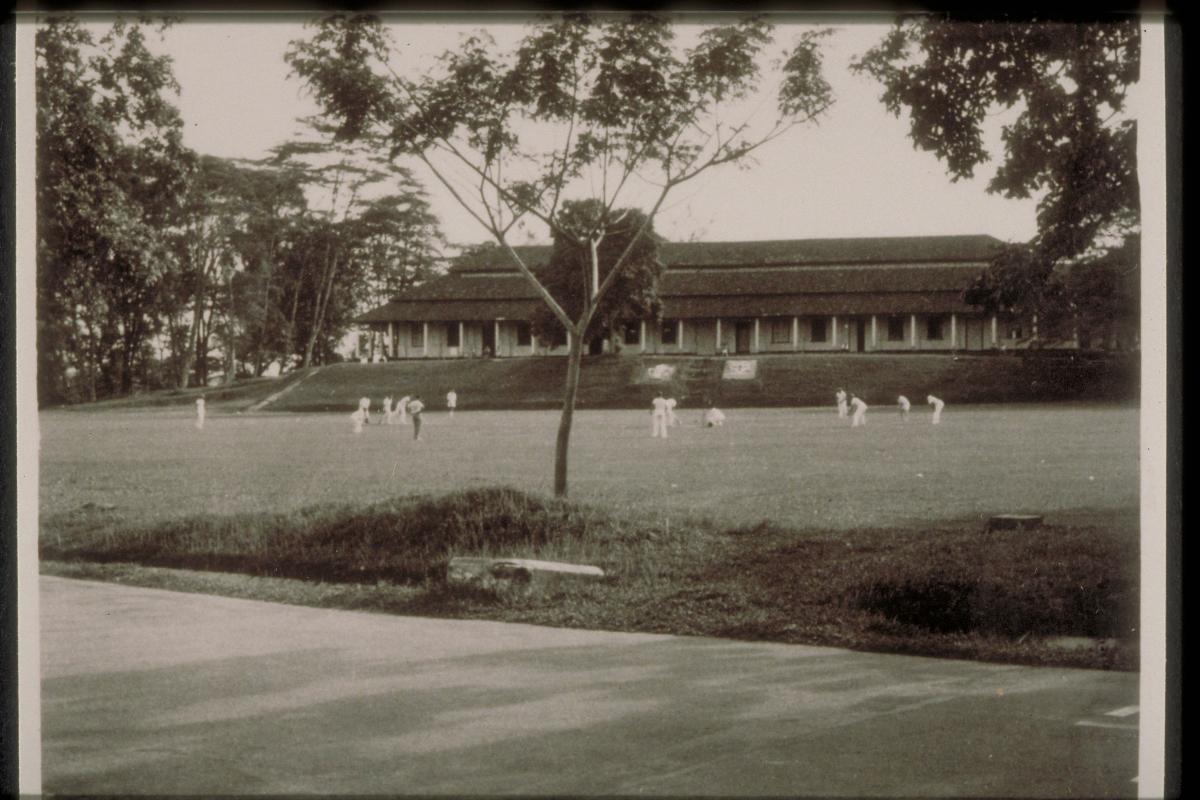

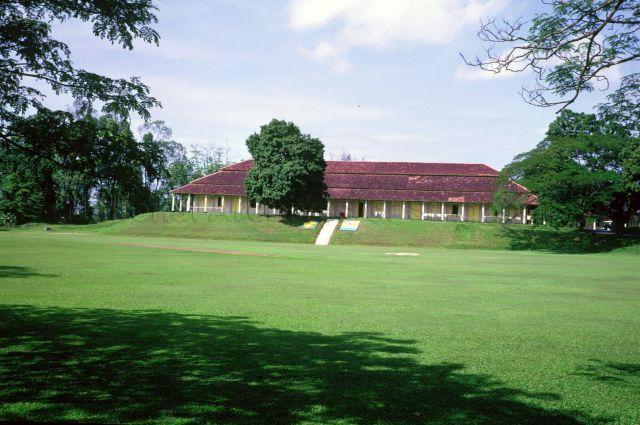


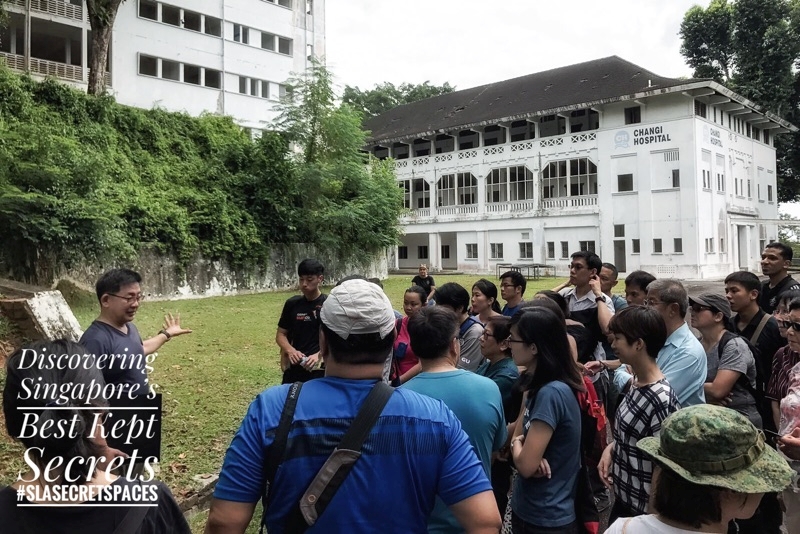




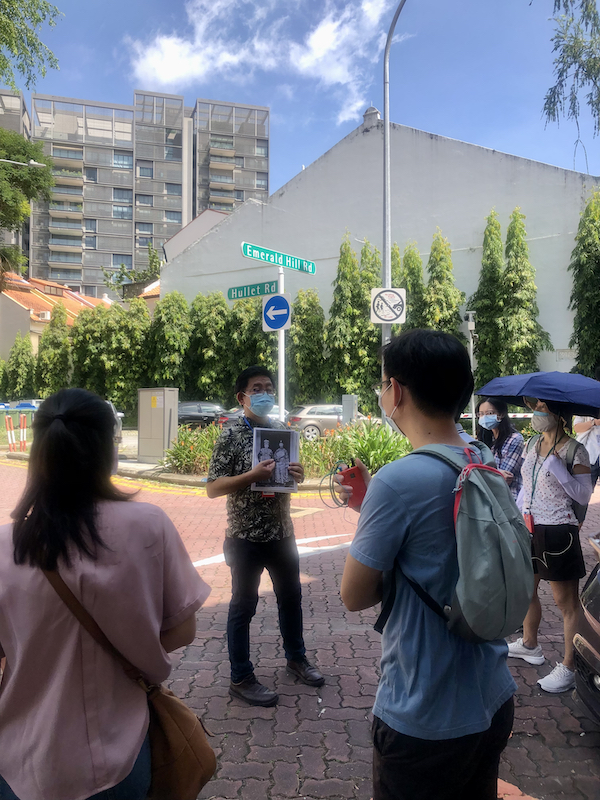

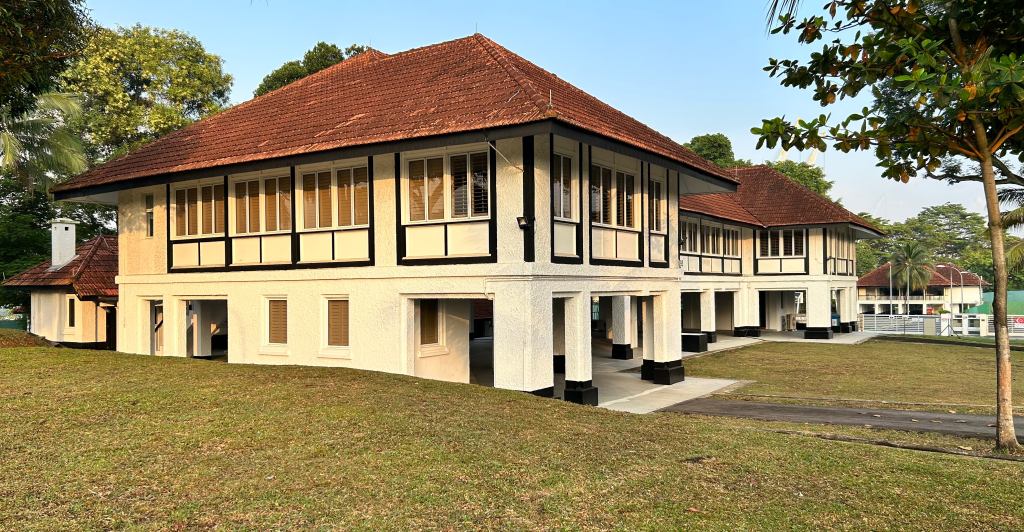

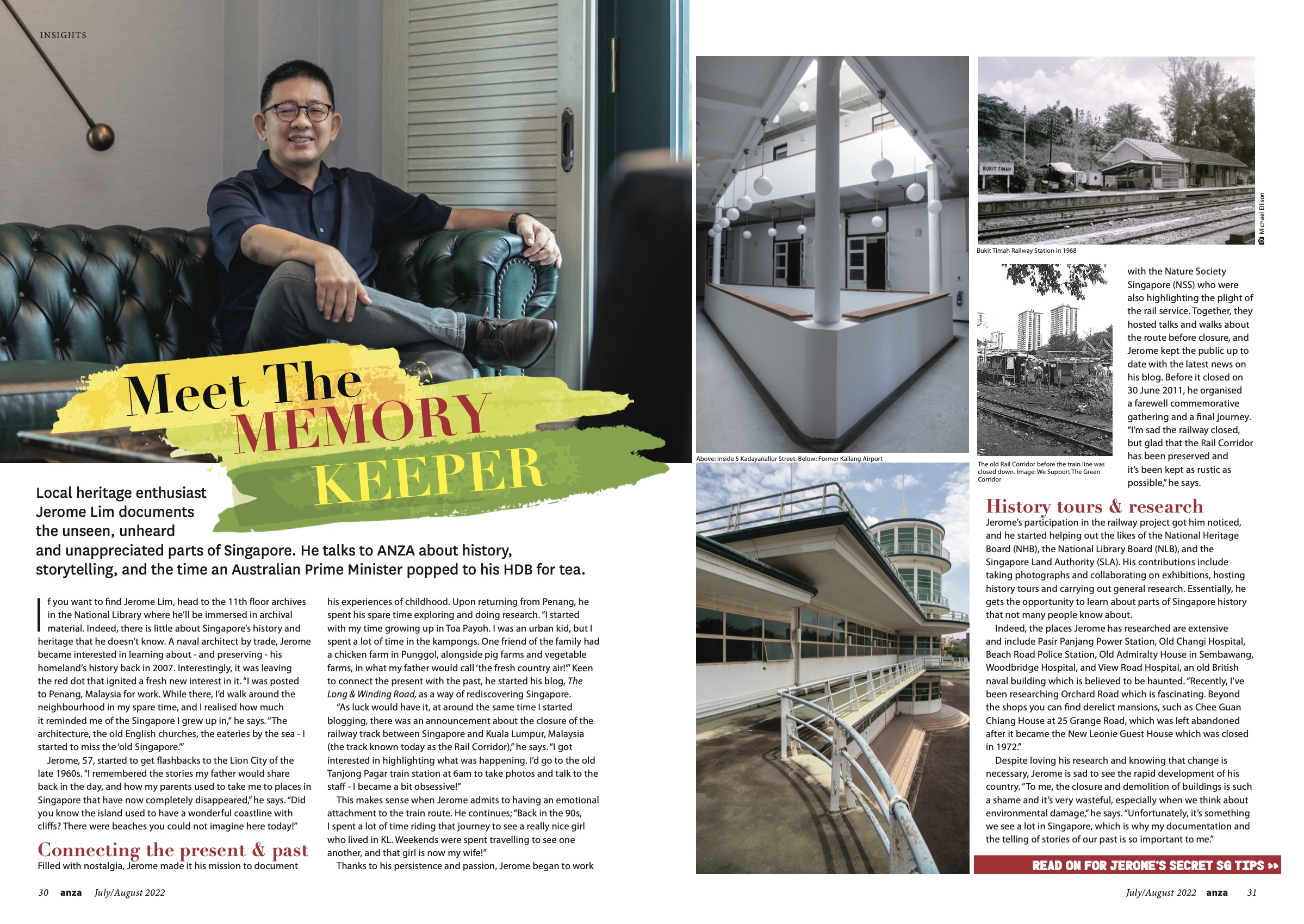


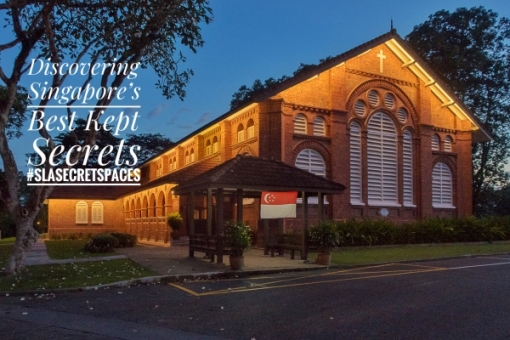

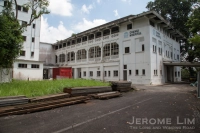





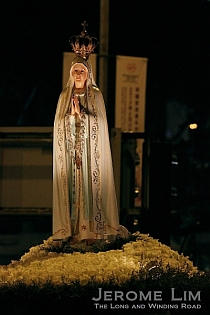
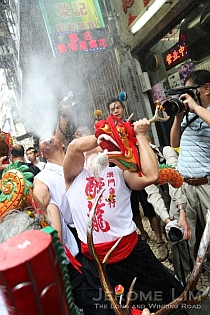
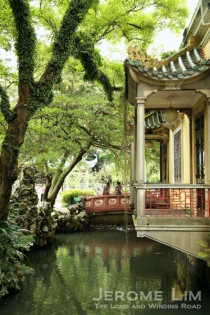
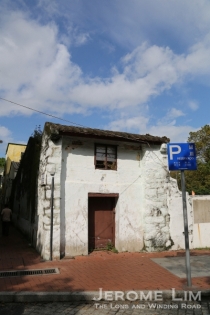




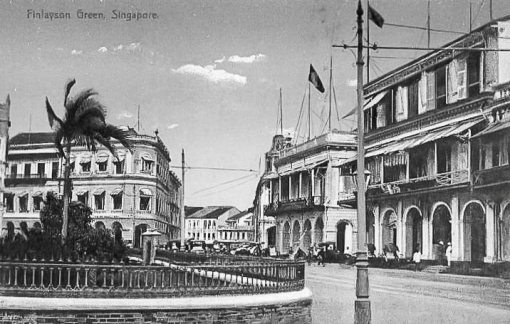
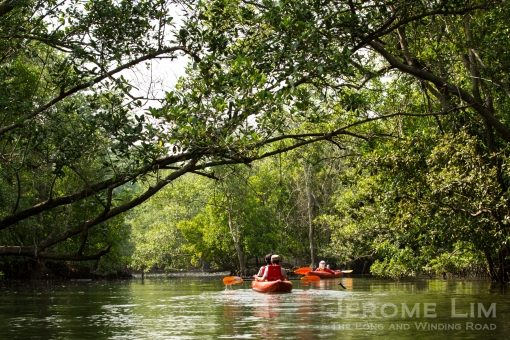
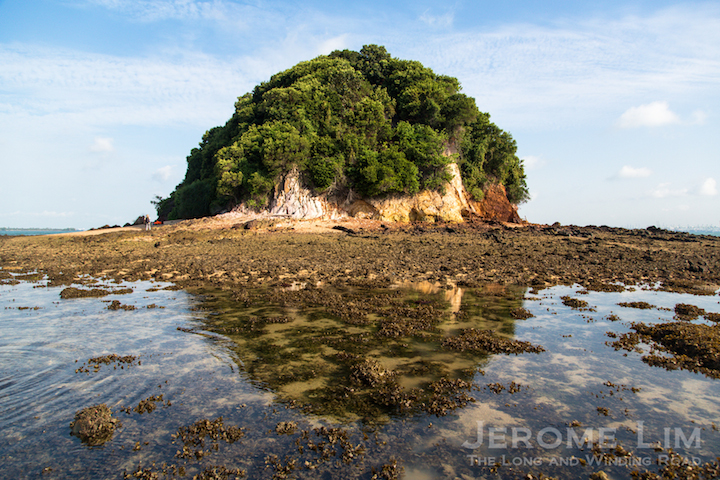

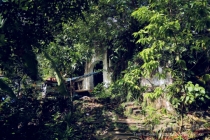
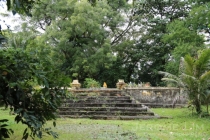
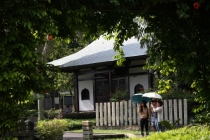
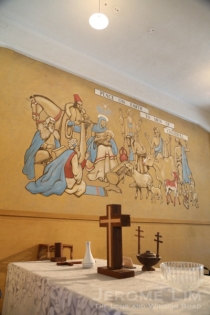



 The Long and Winding Road